
pixtuoid is a Rust-based terminal pixel-art office for AI coding agents. It visualizes multiple agent sessions in a tiled, animated terminal UI with tool integrations and configurable themes.
Collecting history — the radar snapshots this repo daily. The trend line appears after 3 days of data (2 so far).


What it is
pixtuoid is described as a terminal pixel-art office for AI coding agents, where multiple agent sessions are visualized as pixel-art coworkers in a terminal office. It supports multiple agent CLIs (e.g., Claude Code, Codex) via a Source integration mechanism and renders agent activity as animated characters moving between desks.
How it works
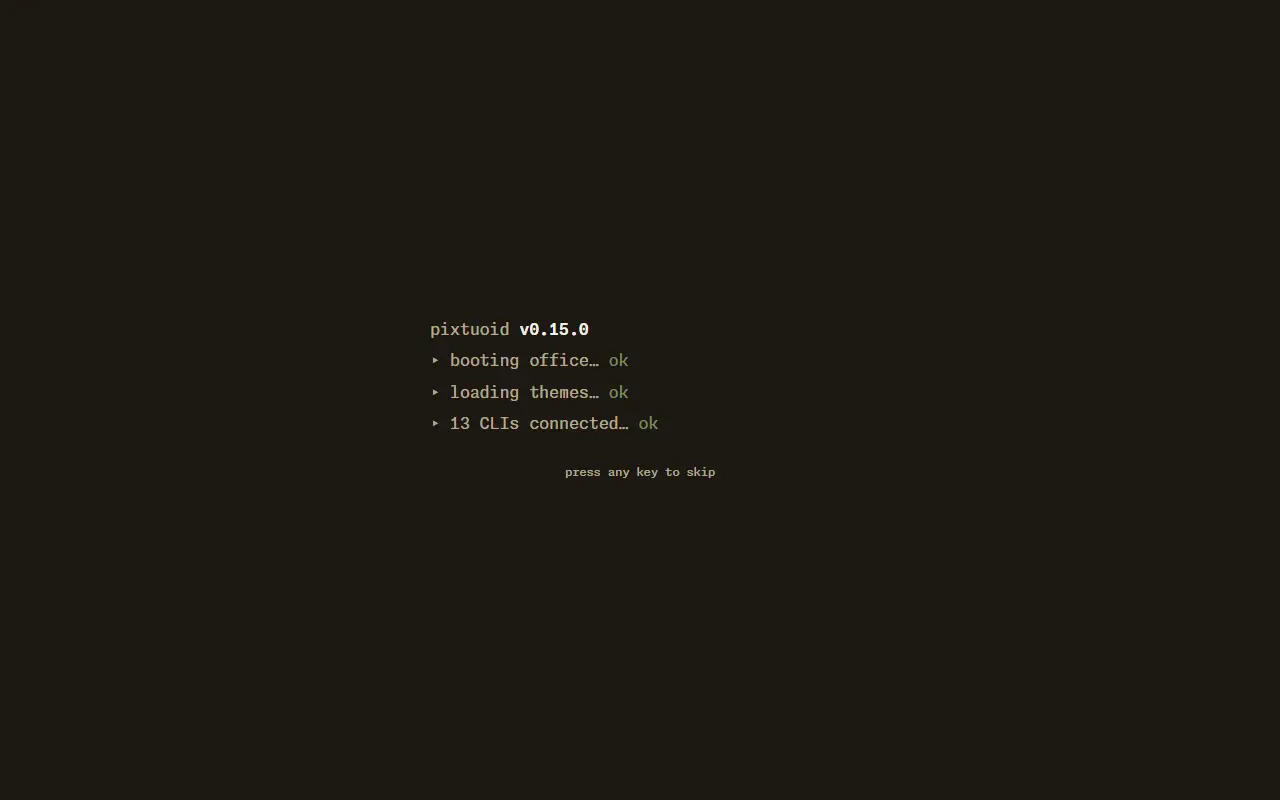
Agent CLIs emit events through a hook shim and a JSONL transcript. These feed into a reducer that maintains office state, and a renderer draws the state as pixel-art in the terminal. The project notes five Rust crates and zero terminal dependencies in the core. It provides a hook shim that uses a Unix socket or Windows named pipes for non-blocking communication and a structured integration to various agent tools.
Getting started
Quick Start section in the README shows installation options and how to run:
- Homebrew: "
bash\nbrew install pixtuoid\n" - npm: "
bash\nnpm install -g pixtuoid\n" - Then launch: "
bash\npixtuoid\n"
Configuration is stored at "~/.config/pixtuoid/config.toml" with optional keys for theme, desk cap, custom pet names, and sprite packs. CLI flags override the config file, e.g., "pixtuoid run --theme dracula".
Recent releases
Latest releases include:
- v0.15.0 (2026-07-16) with bug fixes such as integrating bottom-row packing, obstacle clearance for plants, and E-review round 1.
- v0.14.0 (2026-07-11)
- v0.13.0 (2026-07-06)
- v0.12.0 (2026-07-03)
- v0.11.1 (2026-06-19) including Documentation updates and OIDC publishing for crates.io + npm.
Traction
Stars: 385, with 10 stars gained in the last 24 hours. Open issues: 11. Language: Rust. License: MIT. Created: 2026-05-21. Last push: 2026-07-21.
Behind the repo
Not provided in the excerpt beyond project site notes about architecture and deployment; see the repository for code structure, architecture diagrams, and contributing guidelines.
Caveats
License: MIT. The README notes multiple installation methods and a configuration path, but does not list external dependencies beyond Rust crates; no further caveats are specified in the excerpt.